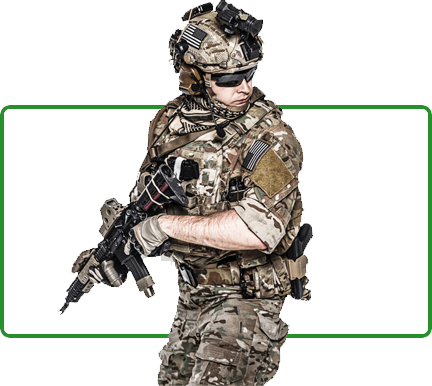
In the field of personal protective equipment, especially stab-resistant clothing and protective gear, material selection directly determines safety performance, comfort, durability, and cost control. Among the most widely used high-performance fibers today, UHMWPE fibers and aramid fibers are considered the two core materials for stab-resistant applications. For stab-resistant clothing and equipment manufacturers, suppliers, and exporters, understanding the differences between these two fibers is essential when developing products for military, law enforcement, security, and industrial protection markets.military, law
This article provides a comprehensive comparison of UHMWPE and aramid fibers from the perspective of stab resistance performance, structural behavior, comfort, durability, manufacturing suitability, and global supply chain considerations, helping stab-resistant clothing and equipment suppliers make informed material decisions.
UHMWPE (Ultra-High Molecular Weight Polyethylene) is a thermoplastic polymer characterized by extremely long molecular chains. These chains create exceptional tensile strength and energy absorption capability, making UHMWPE a popular choice for modern stab-resistant clothing manufacturers and lightweight protective equipment exporters.
Aramid fibers, such as para-aramid, are aromatic polyamides known for their high heat resistance, mechanical strength, and long-standing use in ballistic and stab-resistant protective gear. Many traditional stab-resistant equipment manufacturers rely on aramid due to its proven performance history and stable supply chain.ballistic and stab-resistant protective gear. Many traditional stab-resistant equipment manufacturers rely on aramid due to its proven performance history and st
From a manufacturing perspective, both fibers are widely adopted by professional stab-resistant clothing and equipment suppliers, but they behave differently under stab impact and environmental stress.
.png)
UHMWPE fibers resist stabbing primarily through fiber slippage and energy dispersion. When a sharp object penetrates the fabric, the fibers distribute the force across a wide area, reducing penetration depth. This makes UHMWPE especially effective against pointed threats such as knives, needles, and spikes.
For stab-resistant clothing exporters targeting lightweight and concealed protection markets, UHMWPE offers a clear advantage due to its high strength-to-weight ratio.
Aramid fibers rely on high modulus and structural rigidity to block penetration. Their tight molecular structure resists cutting and tearing, making them effective against repeated stabbing and slashing attacks.
Many stab-resistant equipment manufacturers favor aramid fibers for applications where structural stability and repeated impact resistance are critical, such as riot control gear and industrial protective equipment.
Comfort is a growing concern for modern stab-resistant clothing suppliers, especially in civilian security and daily-wear protection markets.
UHMWPE fibers are significantly lighter than aramid fibers, allowing manufacturers to produce thin, flexible, and discreet stab-resistant garments.
Aramid fibers are heavier and stiffer, which may reduce comfort during extended wear, but they offer better dimensional stability.
For exporters serving long-duty users such as patrol officers or private security personnel, UHMWPE-based stab-resistant clothing often provides a better balance between protection and comfort.
From a safety equipment manufacturing standpoint, environmental adaptability is a key factor.
Aramid fibers perform exceptionally well in high-temperature environments and do not melt, making them suitable for applications where heat exposure is a concern.
UHMWPE fibers have lower melting points and can lose structural integrity under high heat conditions.
Therefore, stab-resistant equipment suppliers targeting firefighting or industrial hot-zone markets often prefer aramid-based solutions, while UHMWPE is favored for everyday security applications.
Durability affects not only product safety but also long-term cost efficiency for stab-resistant clothing manufacturers and exporters.
Aramid fibers offer excellent abrasion resistance and long-term dimensional stability.
UHMWPE fibers are resistant to moisture and chemicals but may degrade under prolonged UV exposure if not properly treated.
Professional stab-resistant equipment manufacturers often combine protective coatings or fabric structures to enhance UHMWPE durability, especially for export markets with varied environmental conditions.
.png)
From a supplier and exporter perspective, production efficiency and material availability matter.
UHMWPE fibers are easier to laminate and integrate into lightweight composite structures, reducing overall garment thickness.
Aramid fibers require more complex weaving and cutting processes but provide consistent performance across large production runs.
In terms of cost, UHMWPE generally offers a more competitive solution for large-scale stab-resistant clothing exporters, while aramid fibers remain popular in premium or specification-driven contracts.
Different end-use markets drive different material choices:
Civilian security and concealed protection → UHMWPE-based stab-resistant clothing
Military and riot control gear → Aramid-based stab-resistant equipment
Hybrid solutions → Combination of UHMWPE and aramid layers
Leading stab-resistant clothing and equipment suppliers increasingly adopt hybrid structures to meet diverse customer requirements across global markets.
There is no single “better” fiber—only the right fiber for the right application. For stab-resistant clothing manufacturers, suppliers, and exporters, UHMWPE offers lightweight comfort and excellent stab dispersion, while aramid fibers provide structural stability and heat resistance.
Understanding these differences allows professional safety protection product developers to design reliable, compliant, and market-competitive stab-resistant clothing and equipment for global distribution.