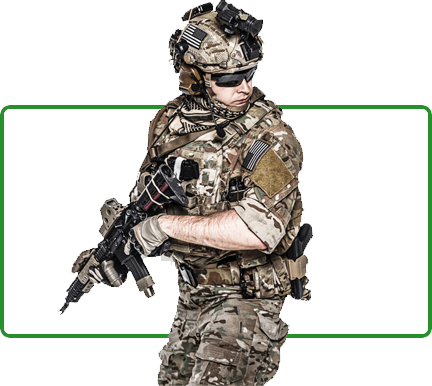
Tactical gear has long been associated with military and law enforcement personnel. When most people think of tactical vests, helmets, backpacks, or specialized clothing, the immediate mental image is of soldiers on the battlefield or police officers in high-stakes operations. However, the landscape of tactical gear usage has evolved significantly in recent years, extending far beyond traditional military or police applications. Manufacturers, exporters, and distributors of tactical equipment have recognized an expanding market, catering to outdoor enthusiasts, security professionals, first responders, and even civilians seeking functional and durable gear.
.png)
Originally, tactical gear was designed to meet the rigorous demands of military operations. These products needed to be highly durable, lightweight, and functional, often integrating features such as MOLLE webbing for modular attachments, ballistic protection, or specialized compartments for communication devices. Tactical gear manufacturers typically operate as military fabric factories or tactical gear suppliers, focusing on materials that can withstand extreme conditions while ensuring comfort and mobility.
Over time, innovations in fabric technology and design allowed manufacturers to expand their offerings. Modern tactical fabrics often incorporate advanced features such as water resistance, flame retardancy, tear resistance, and anti-stab properties. Such innovations have opened doors for workwear fabric manufacturers and tactical gear exporters to enter civilian markets where durability and functionality are highly valued.
While tactical gear remains crucial for military and police, it is now widely used in various civilian and commercial scenarios:
Outdoor and Adventure Activities
Hiking, camping, airsoft, paintball, hunting, and other outdoor sports have fueled demand for tactical backpacks, vests, and clothing. These products provide organizational efficiency, durability, and comfort, features originally designed for battlefield conditions. Many outdoor gear manufacturers collaborate with airsoft, paintball, hunting, and other outdoor sports have fueled demand for tactical backpacks, vests, and clothing. These products provide organizational efficiency, durability, and comfort, features origiairsoft, paintball, hunting, and other outdoor sports have fueled demand for tactical backpacks, vestairsofttactical gear factories to source high-performance fabrics suitable for these activities.
Private Security and Emergency Services
Private security companies, event security staff, and emergency responders rely heavily on tactical gear for both protection and practicality. Tactical helmets, gloves, and protective vests are now commonly used outside traditional military settings. Suppliers and tactical gear exporters have adjusted their product lines to accommodate regulations and specific needs of these commercial clients.
Urban Survival and Preparedness
With growing interest in personal preparedness, tactical gear has found a place in urban environments. Civilians purchase tactical backpacks, utility belts, and multi-functional apparel not only for their resilience but also for versatility in emergencies. Here, tactical gear distributors play a crucial role in bridging the gap between factories and end-users, ensuring availability in various regions and markets.
Manufacturing: Tactical gear factories invest in high-quality woven fabrics, advanced stitching techniques, and rigorous quality testing to meet diverse operational needs. Fabrics such as ripstop nylon, polyester blends, and specialized flame-retardant or anti-stab materials are common.
Distribution: Exporters and distributors ensure that tactical gear reaches global markets, adapting packaging, branding, and logistics to meet local regulations and consumer preferences.
Innovation: Continuous collaboration between manufacturers and clients encourages the development of versatile gear suitable for both professional and civilian use, combining functionality, comfort, and durability.
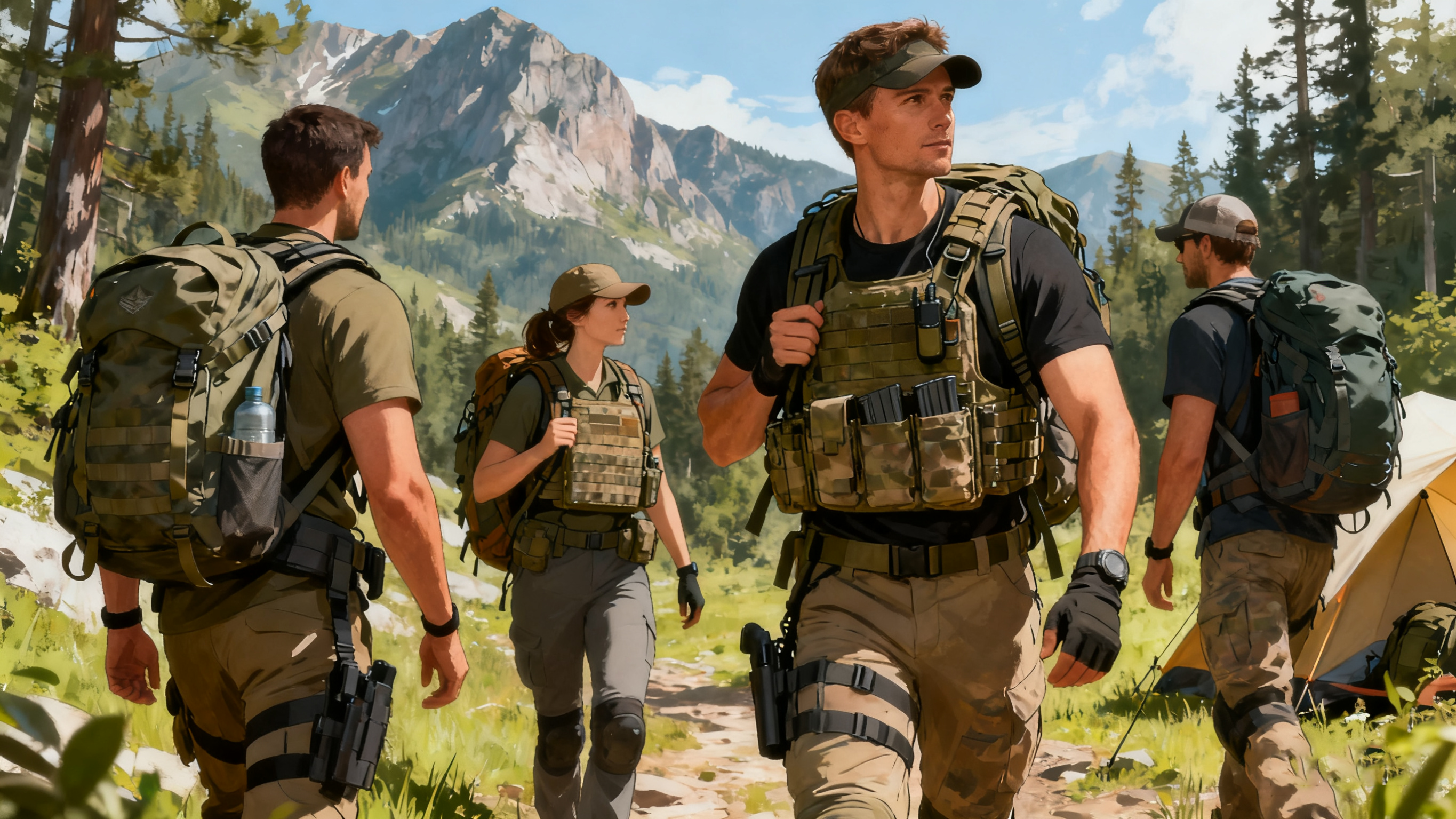
Moreover, tactical gear is not just about protection—it emphasizes organization, adaptability, and efficiency. Manufacturers and suppliers who understand these principles can successfully cater to a broad spectrum of users, from security companies to outdoor hobbyists.
Several factors contribute to the growing popularity of tactical gear in non-military settings:
Durability: Tactical fabrics are engineered to resist tearing, abrasion, and environmental stresses.
Functionality: Multiple compartments, modular attachments, and ergonomic designs enhance usability.
Comfort: Modern tactical gear is lightweight, breathable, and designed for long-term wear.
Aesthetic Appeal: Tactical apparel and equipment have become fashionable in urban and outdoor communities, often worn for style as well as utility.
These qualities highlight why tactical gear manufacturers, exporters, and distributors are expanding their market focus to include civilians and commercial users.
Tactical gear is no longer limited to the battlefield or police operations. Its evolution, driven by advanced fabrics, innovative designs, and versatile functionality, has created opportunities for civilians, outdoor enthusiasts, security personnel, and other commercial users. By working with experienced tactical gear factories, military fabric manufacturers, and global exporters, businesses and consumers alike can access equipment that meets high standards of durability, performance, and practicality.
The question, “Is tactical gear only for military/police?” increasingly answers itself: not anymore. Today’s tactical gear transcends traditional boundaries, proving that innovation in manufacturing and strategic distribution can expand the reach of these products to countless real-world applications.